Key Takeaways
At the end of the project, we were able to exhibit our design concept at an exhibition of 2000+ viewers, where users can actually interact freely with Blossom. Ultimately, we won the Best Overall Award and were recommended to showcase our prototype and poster at the TAICHI and CSCW exhibitions.
Mechanism Design
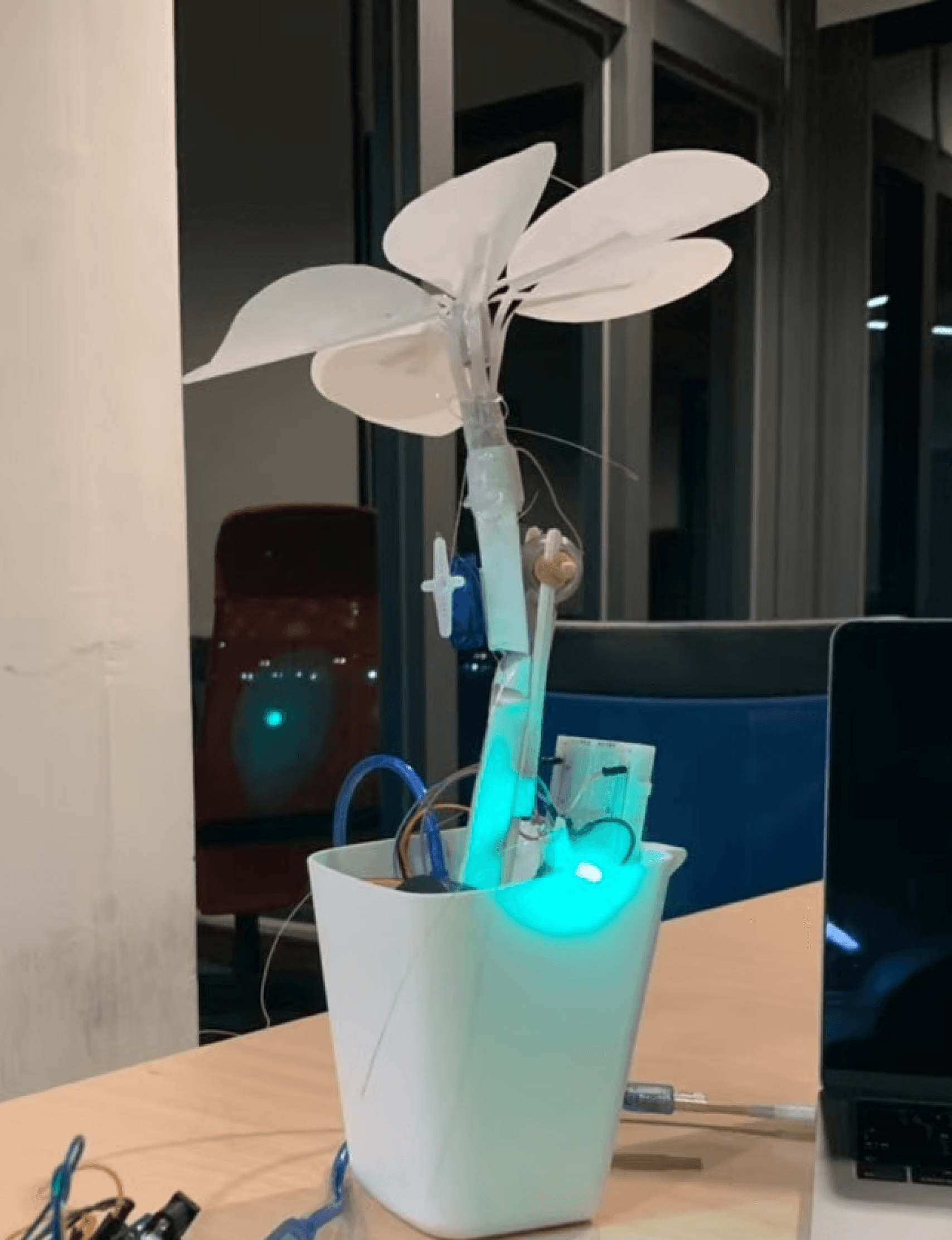
By integrating the following technologies and materials, we created an adorable flower pot that wilts as stress builds up and blooms when energy is restored.
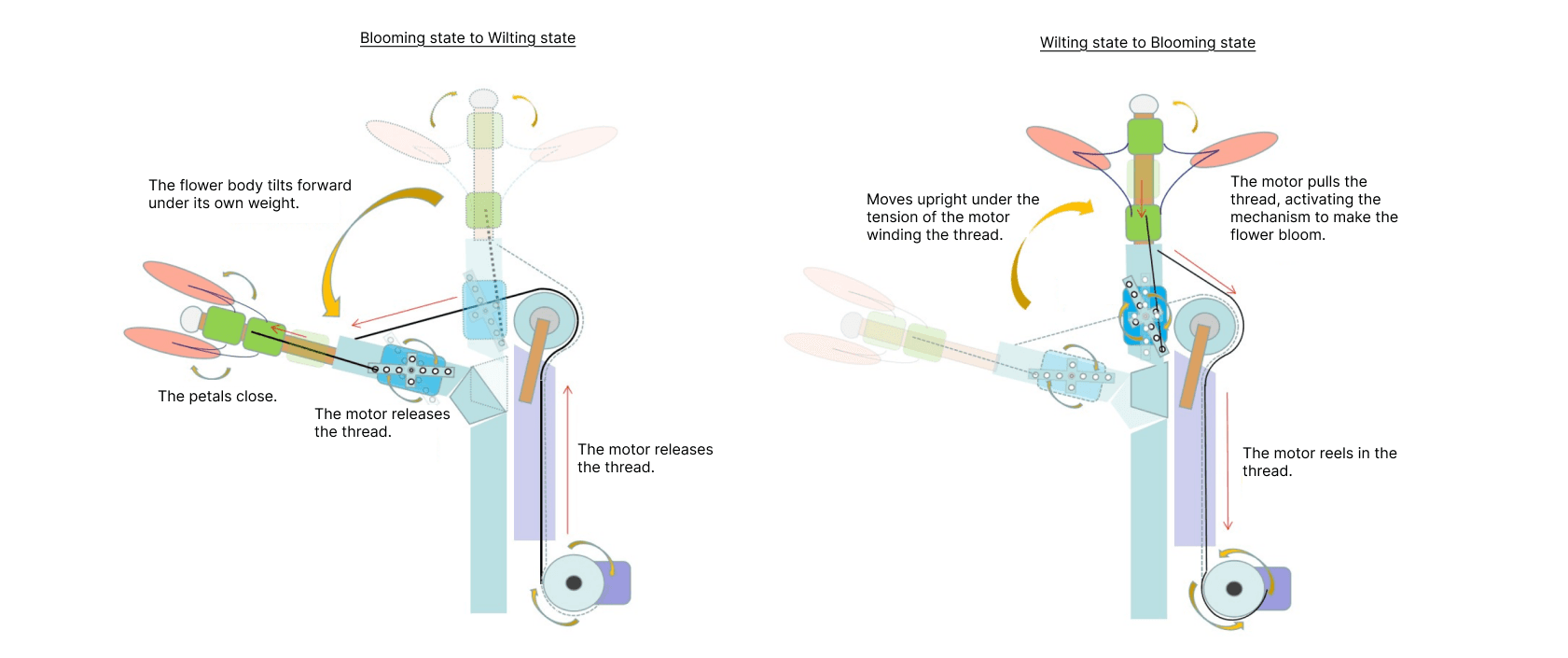
Created a simple flower prototype using paper and bamboo chopsticks, attaching the calyx to a movable ring that expands or contracts the petals when the ring is pulled up or down.
When the LED displays red, the motor rotates to loosen the string connecting the bud, creating a wilting effect. When the LED turns blue, the string tightens to make the flower bloom.
A photoresistor detects whether the flowerpot is exposed to sunlight, and an MPU-6050 serves as a pedometer. Step count data is transmitted via UART to an Arduino, which controls the overall logic to determine whether the flower blooms again.
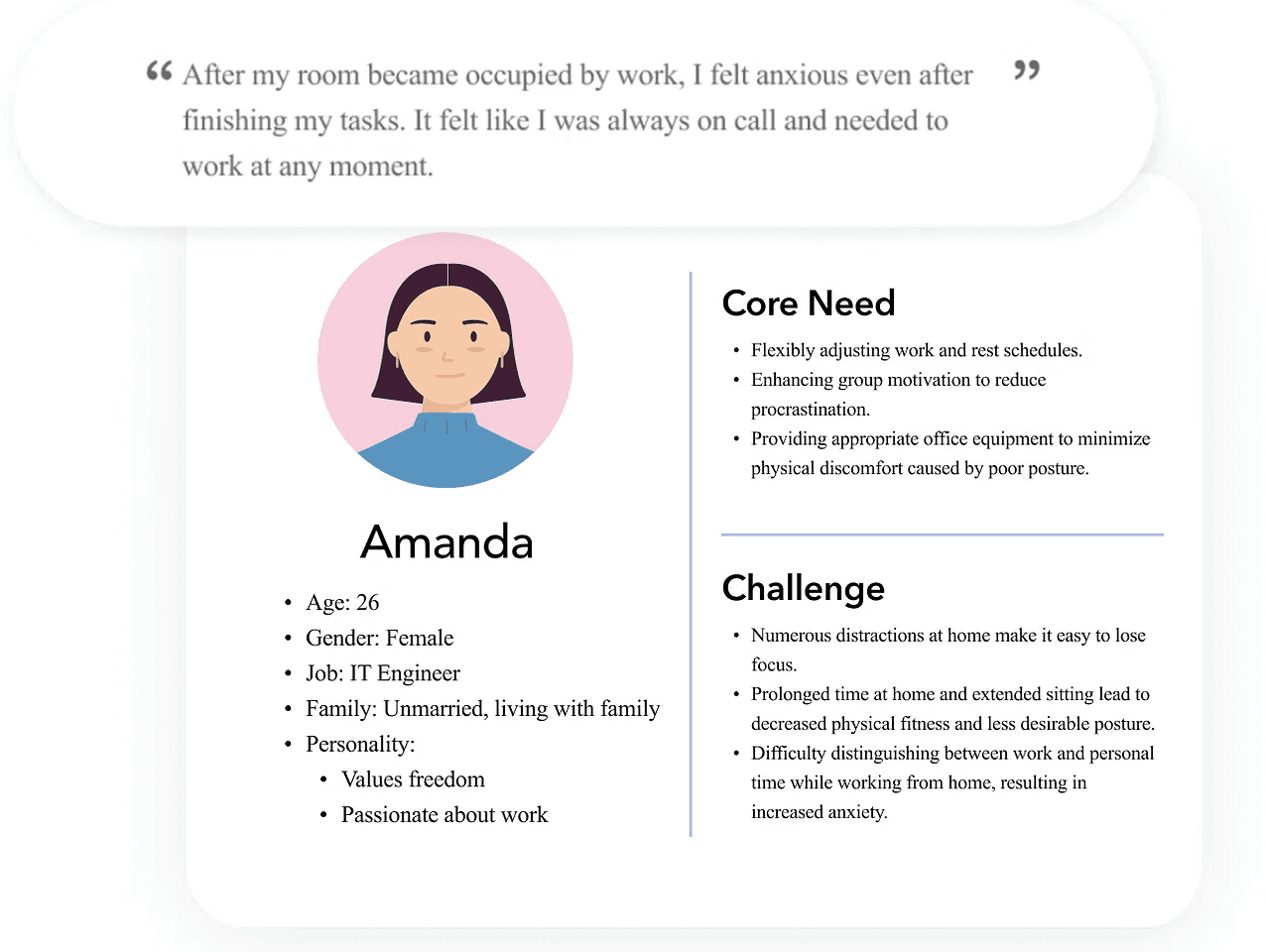
By analyzing the data from five interview participants and survey results, we identified a target user through a persona spectrum. This user frequently faces physical and mental challenges while working from homeand hopes to establish clear boundaries between work and rest.
Full Case Study
Blossom
Helping Remote Workers Balance Work & Life through Ambient Stress Visualization
Interaction Design
Well-Being
User Research
TL;DR
Challenge
Remote and hybrid work environments have intensified stress while simultaneously reducing opportunities for embodied stress regulation.
The challenge of this project was to explore how physiological data and tangible interaction could be translated into an intuitive, emotionally resonant experience that supports stress awareness and regulation without requiring explicit cognitive effort.
Outcome
Blossom resulted in a functional interactive prototype that translates physiological signals into gentle, perceptible changes in a physical artifact, enabling users to externalize and reflect on their internal states.
The project was:
Exhibited in demo sessions at TAICHI 2022 and CSCW 2022, receiving positive feedback for its poetic and calming interaction style
Recognized for demonstrating how tangible biofeedback can support emotional regulation in everyday work contexts
“How can we help remote workers become aware of their mental state and encourage them to set aside work to take a break?”
Methods
Experience prototyping using Arduino, integrating physiological sensors (e.g., heart rate / breathing-related signals) to capture real-time bodily states
Tangible and metaphor-driven interaction design, where a flower-like artifact subtly responds to users’ physiological changes
Iterative prototyping and informal user evaluation, focusing on emotional response, interpretability, and perceived calming effects rather than performance metrics alone
My role
User Researcher Lead
Team
3 User Researcher
3 Product Designer
Duration
Jul 2022 - Nov 2022
Deliverables
Survey
User Interview
Persona
User Journey Map
Interactive Device
Mechanism Design
If the user's stress levels are detected to be high, the Blossom gradually wilts, and the LED light changes to a red glow.
When the user takes a break and gets sunlight exposure, "Blossom" blooms again, with the LED light gradually transitioning back to blue.
Context
After the pandemic, hybrid and remote work became common, blurring the boundary between work and personal time. Research shows that effective time management is essential for maintaining work–life balance, yet many remote workers struggle with psychological detachment—the ability to mentally switch off from work. This leads to stress, fatigue, and reduced productivity.
User Research
To understand the characteristics of remote workers in Taiwan, we distributed a survey in relevant online communities and received over 70 responses. Additionally, we conducted in-depth interviews with five remote workers to explore their daily lives, experiences, and physical/mental states while working from home. According to the research results, we identified the most pressing issues faced by remote workers and outlined three key opportunities: stress management, work efficiency, and team dynamics.
56% of respondents felt that the boundary between work and rest had become blurred, leading to lower efficiency and unintentional overtime.
31.8% of respondents reported difficulty shifting between work and off-work mindsets, often relying on changes in tools, environment, or routines to transition.
28.8% of respondents experienced increased emotional strain while working from home, citing isolation, lack of social interaction, and reduced motivation.
Key Insight
1
3
2
Persona
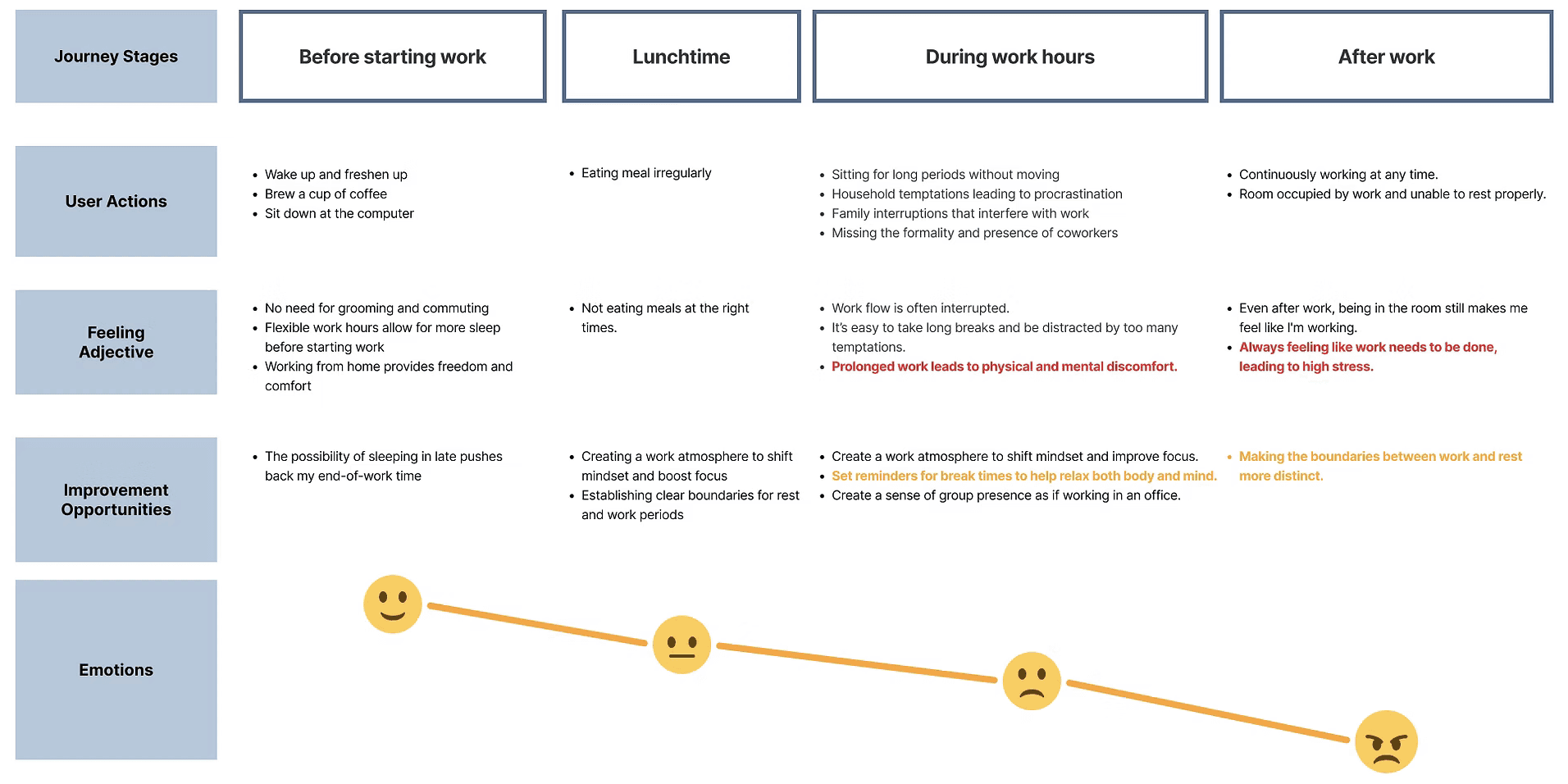
User Journey Map
Based on the persona, we have created a detailed user journey map that describes the daily routine and feelings of working from home. We aim to focus on preventing work from causing excessive mental stress andestablishing a clearer boundary between work and rest to achieve work-life balance.
Problem Statement
How can we help remote workers become aware of their mental state and encourage them to set aside work to take a break?
Ideations
By detecting heart rate variability (HRV), visualize the remote worker's current stress level. Use the wilting of a flower and changes in light to prompt the worker to become aware of their stress and step outside to get some sunlight. As the flower blooms again, it encourages the worker to rest and recharge.
1
Remind users when it's time to rest and create a relaxing atmosphere to distinguish rest from work.
2
Enhance the work atmosphere to shift mindset and improve focus.
3
Increase group pressure during WFH (sense of community, formality, and professionalism)
Interactive Flow
Sense
Blossom continuously monitors the user’s heart rate via a connected wearable to infer stress levels.
Express
Stress is translated into a tangible flower metaphor, shifting from green and blooming to red and wilting as tension increases.
Intervene
When elevated stress is detected, the system encourages restorative breaks through gentle prompts, escalating from visual cues to vibration if unaddressed.
Recover
After the break, the flower regains vitality and returns to green, signaling emotional recovery and closure of the stress cycle.
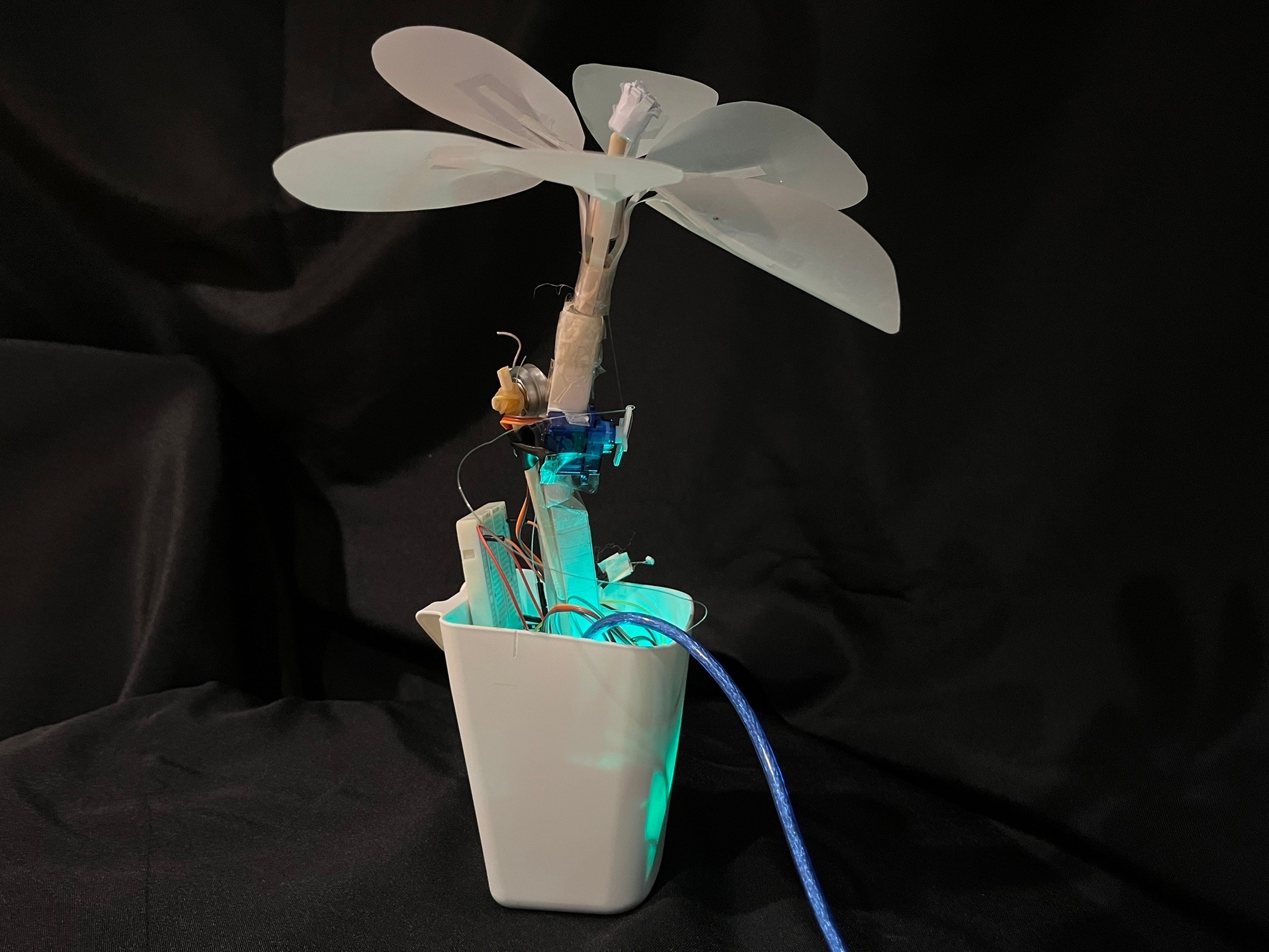
Blooming State
"Blossom" blooms with its LED light glowing blue, indicating that the user is currently in a stable mental state.
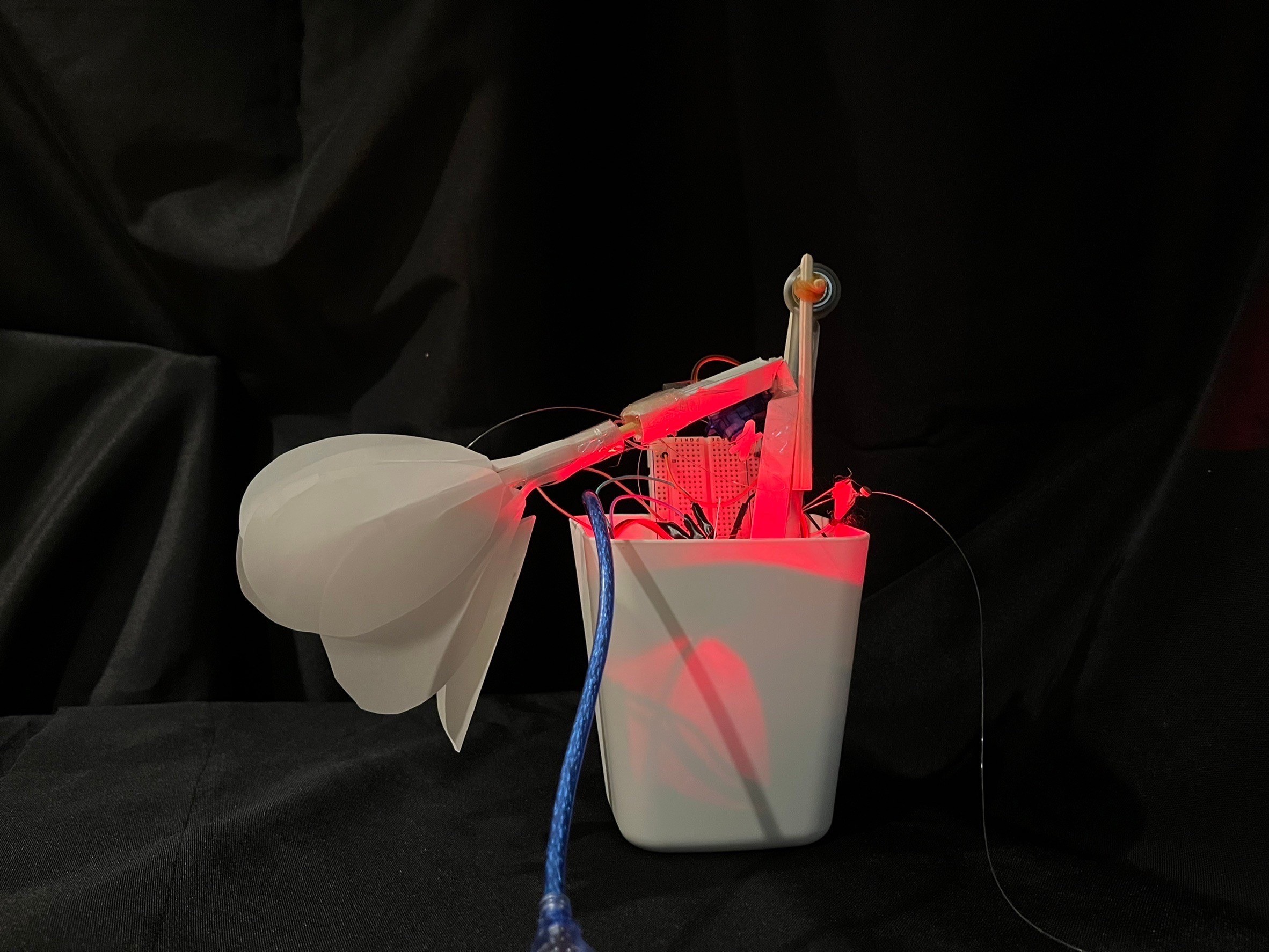
Wilting State
"Blossom" wilts with its LED light glowing red, indicating that the user may be under excessive stress and needs to take a proper break.
Learned to translate abstract concepts into shared design language
Working on Blossom strengthened my ability to articulate intangible ideas—such as stress and emotional states—into clear metaphors and system logic that could be discussed, critiqued, and refined collaboratively within the team.
Improved cross-disciplinary collaboration through prototyping
By using low- and mid-fidelity prototypes as conversation tools, I learned how to align perspectives across design, engineering, and research, turning ambiguous ideas into concrete discussions and decisions.
Developed comfort with ambiguity and iterative decision-making
The project required moving forward without a “correct” answer upfront. I learned to make progress through rapid exploration, feedback, and iteration, rather than waiting for certainty.
Strengthened communication and feedback integration skills
Regular critiques and team check-ins helped me practice receiving, synthesizing, and acting on feedback, balancing individual ownership with collective decision-making.
Thank you for visiting my portfolio! :)
Copyright © 2026 Tim Tang